
Prepare your thesis defense in 7 days: a day-by-day plan
Thesis or final-year project defense in a week? A day-by-day plan: slides, speech, jury questions, rehearsals, what to wear and logistics.
Data Académique
10/13/20264 min read

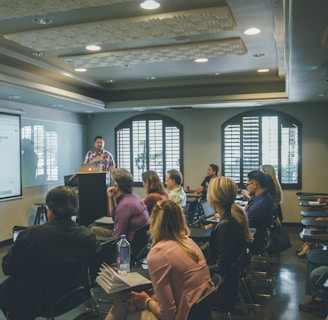
Your thesis is submitted and the defense date is one week away. Don't panic: 7 days are enough to prepare a clear presentation and face the jury calmly, as long as you get organized. Here is a day-by-day plan, valid for bachelor's, master's and health institute students.
In short: in 7 days you can prepare a solid defense: day 1, reread the thesis; day 2, build the outline; day 3, create the slides; day 4, write your speech; day 5, prepare the jury's questions; day 6, rehearse out loud; day 7, handle logistics and rest.
Day 1: reread your thesis through the jury's eyes
Reread your whole thesis, pen in hand. Note:
the 3 to 5 main messages of your work;
the weak points the jury is likely to raise (small sample, a single site studied, an unverified hypothesis…);
typos or errors you may want to mention at the start of the defense.
The jury has read your thesis. It wants to see whether you master it, not hear it summarized page by page.
Day 2: build the outline of the presentation
For a 10 to 15-minute presentation (the most common length; check yours), aim for 10 to 15 slides:
Title, name, supervisor, institution
Outline of the presentation
Context and relevance of the topic
Research problem and research question
Objectives and hypotheses
Methodology (study type, population, sample, tool)
Main results (2 to 4 slides)
Discussion
Limitations
Conclusion and recommendations
Thank you
Day 3: create the slides
A few simple rules immediately make a presentation more professional:
One idea per slide, with a title that states the message ("68% of patients are satisfied with the reception" rather than "Results").
Little text: 3 to 5 short lines maximum. You give the details orally.
Simple charts rather than copy-pasted SPSS tables.
A readable font (size 20 minimum for text), two or three colors, the institution's logo.
Number the slides: the jury will refer to them during the questions.
Day 4: write what you will say
For each slide, write 3 or 4 key sentences in the presenter notes. Do not write a text to read: the jury notices immediately. Above all, prepare a solid introduction and conclusion that you will know almost by heart. These are the moments when stress is highest.
Day 5: prepare the jury's questions
List at least 15 possible questions and prepare a short answer for each. The most frequent:
Why did you choose this topic?
Why this method and not another?
How did you calculate your sample size?
Why this statistical test? What does this p-value mean?
Can your results be generalized?
What would you do differently if you started again?
What is the practical use of your work?
When criticized, do not defend yourself at all costs. Thank the jury, acknowledge the limitation if it is real, then explain your choice. This attitude is what the jury grades.
Day 6: rehearse out loud
Do at least three timed rehearsals, standing, as on the day. The first alone, the next ones in front of a friend or family member who asks you questions. If you go over time, cut content rather than speaking faster.
Record yourself once with your phone: you will quickly spot the "ums", overly long sentences and the moments when you read the screen.
Day 7: handle logistics and rest
Save the presentation in PowerPoint and PDF, on a USB drive and in your email.
Check the room, the time and the equipment (projector, HDMI adapter).
Prepare a printed copy of the thesis for yourself, with bookmarks on the key tables.
Choose your outfit the day before.
Do one last light rehearsal, then stop. Sleep well.
On the day: 5 tips
Arrive 30 minutes early and test the computer.
Start by thanking the jury and your supervisor in one sentence.
Look at the jury members, not the screen.
Write the questions down on a sheet before answering.
If you do not know, say so honestly and suggest a possible answer.
Full guides for each step
This week of preparation relies on two detailed guides:
Thesis defense PowerPoint presentation: outline and 12 tips, for days 2 and 3;
Thesis defense questions: 25 common jury questions, for day 5.
If your report is not finished yet, start with the introduction and conclusion, which will form the basis of your first and last slides. And for the acknowledgements page: acknowledgements and dedication templates.
Online defense: what to check
Some defenses take place by video conference. The day before, test your connection, camera and microphone, screen sharing and Presenter View. Choose a quiet, well-lit place and keep your presentation as a PDF ready to send in case of technical problems.
Frequently asked questions
How many slides for a 15-minute defense?
Usually 12 to 15, about one minute per slide.
Should I learn my presentation by heart?
No. Learn the introduction, the conclusion and the sequence of ideas. The rest should stay natural.
What if I lose my composure?
Pause, breathe, look at your notes and pick up again from the last slide title. Juries are used to students' stress.
What should I wear on defense day?
Sober, professional clothes: a jacket, shirt or blouse, neutral colors, comfortable shoes. For a final-year project, take inspiration from the host company's dress code.
We prepare your defense with you
Data Académique can create your PowerPoint presentation and coach you for the defense, including practice with likely jury questions. Discover our thesis support or message us on WhatsApp.